E-Catalogue
E-Catalogue is a secure web platform developed by the Estonian Centre of Registers and Information Systems (RIK) for managing post-contract procurement activities, where authenticated users can log in to view, search, sort, and interact with contracts and related products/services tied to their role in public procurement workflows. The system supports role-based access, detailed contract and item views, advanced filtering, and data export functions, enabling both buyers and suppliers to efficiently handle contract details, product/service catalogs, and related administrative actions within an Estonian e-procurement ecosystem.
My Role
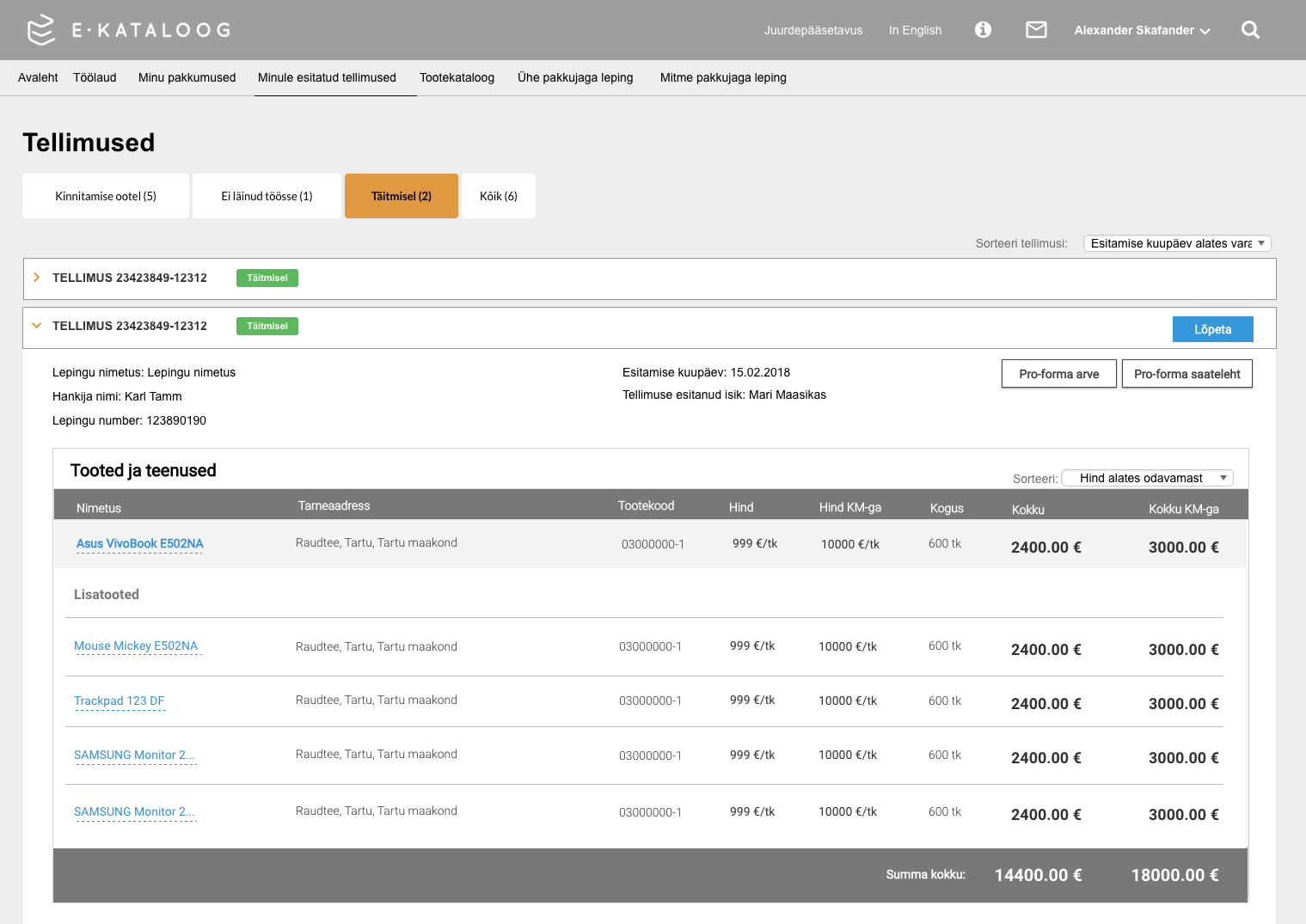
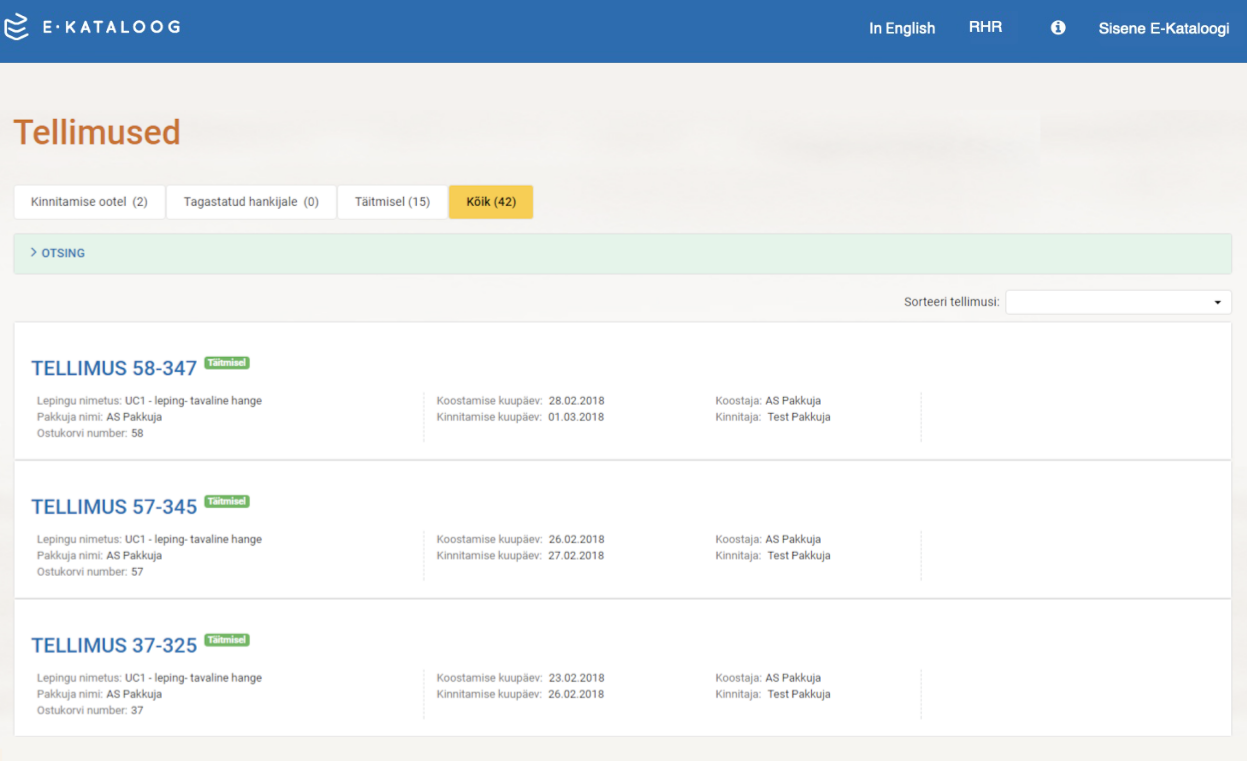
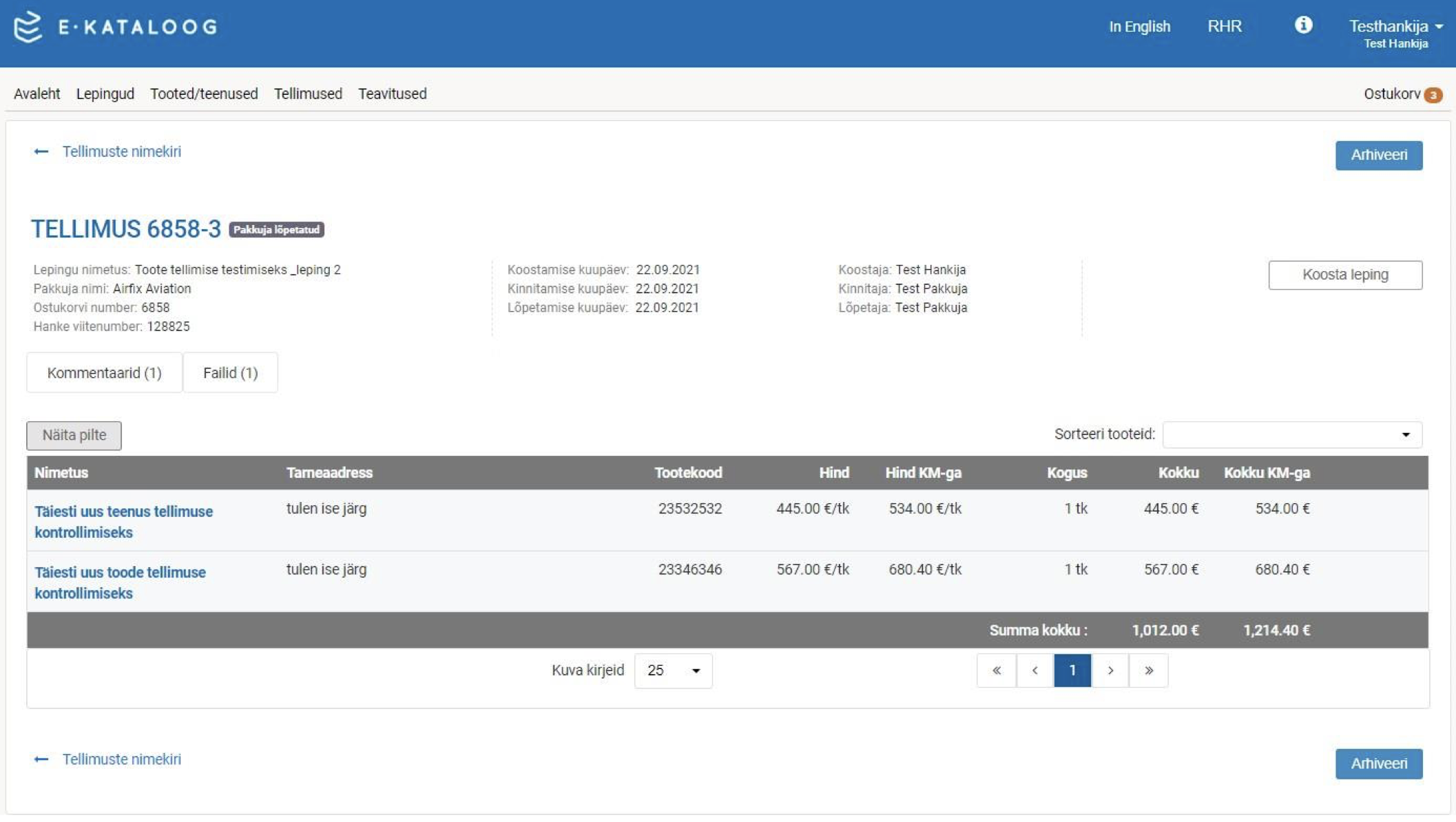
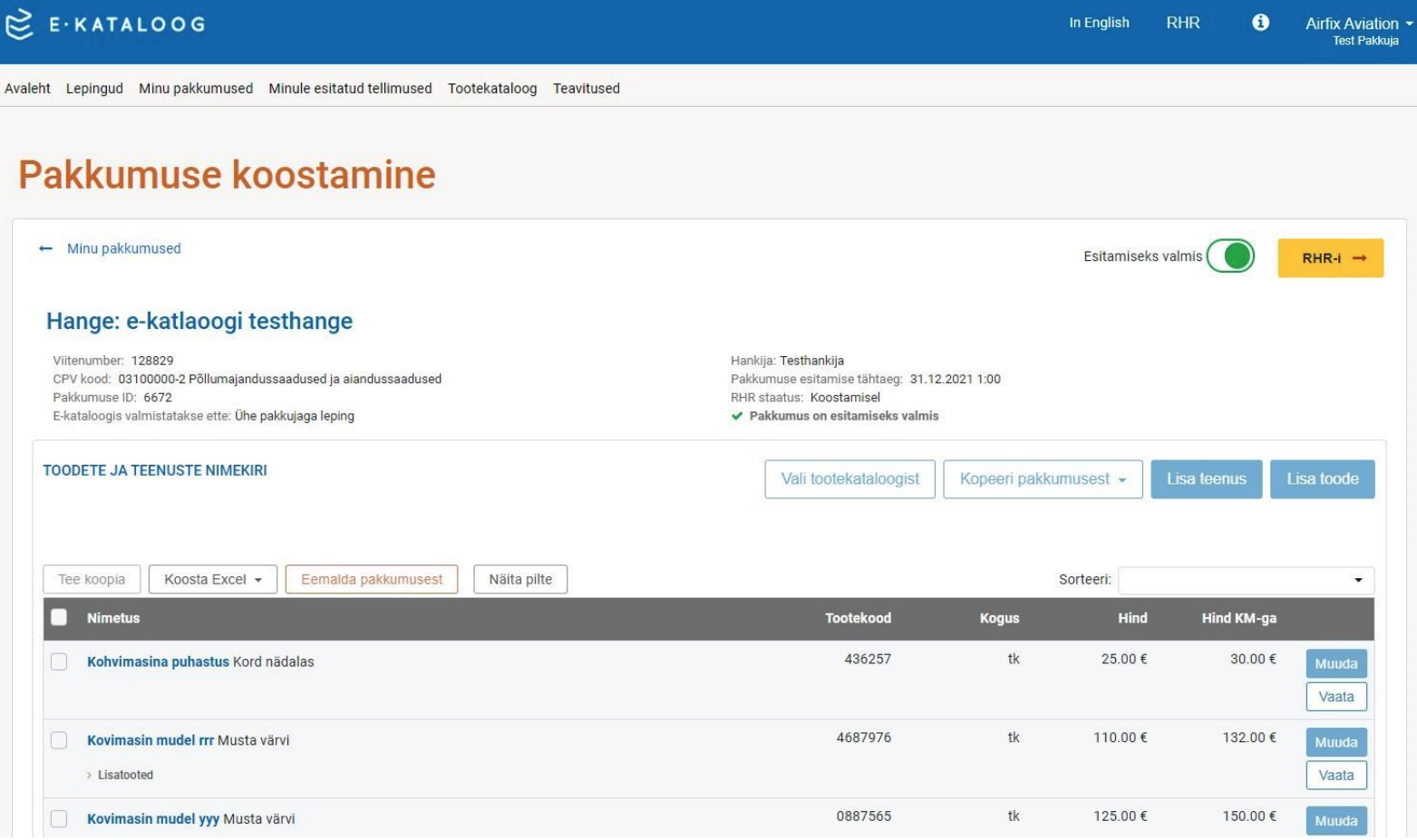
This was my first project in a UI Designer role. I worked as a UI Designer and Developer on E-Catalogue, translating evolving business requirements into clear, usable interface structures for a complex, data-heavy system. Working closely with a Business Analyst and initially supported by a Senior Designer, I took ownership of designing and iterating key views and made layout decisions for core workflows such as orders, offers, and contracts, defining consistent list, table, and action patterns.
- Hybrid UI Designer & UI Developer, contributing across design and implementation
- Designing low- and high-fidelity prototypes in UXPin, iterating based on stakeholder feedback
- Implementing UI using HTML, CSS, JavaScript, and Angular, with customized Bootstrap components
- Collaborating closely with an IT Business Analyst to translate user stories into clear visual solutions
Design Challenges
How might we manage contract and order information in a way that gives all role-based users a real-time, shared understanding of progress, status, and ownership across the contract lifecycle?
How might we design search, filtering, and browsing so users can find what they need faster?
How might we structure information so users can move confidently from overview to detail and back again?
Process
I designed and prototyped UI views in parallel with ongoing business analysis, at a stage when the full product structure was still emerging. Then, I translated early user stories into concrete, discussable interfaces, giving the team shared visual references. As understanding deepened, layouts and view structures were iteratively refined, allowing the information architecture to evolve alongside the product definition.
Outcome
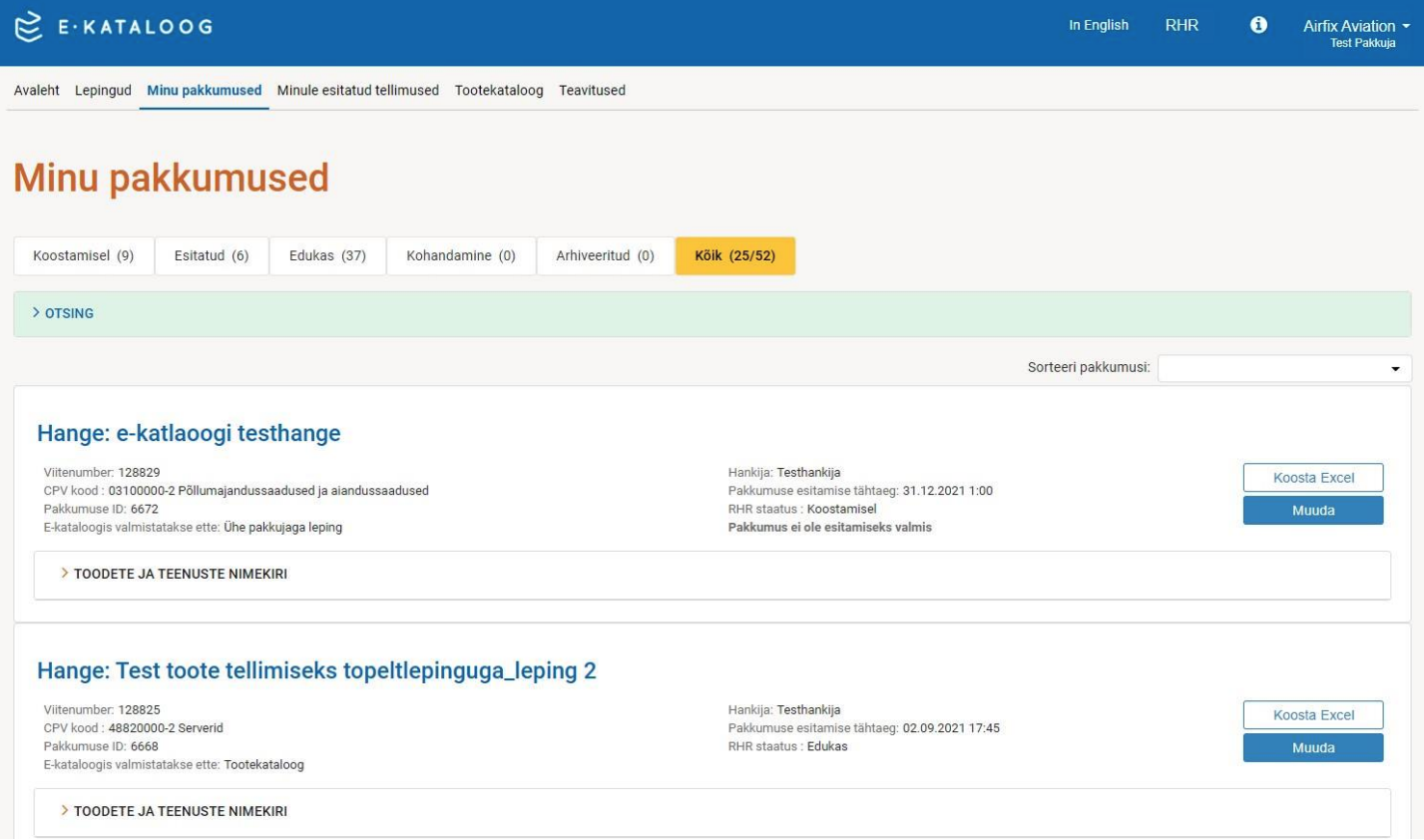
The UI and UX work translated complex, role-based procurement data into a structured and navigable experience. Users could both maintain a clear overview of contracts, related products or services, and ongoing orders, and efficiently manage product and service data throughout the contract lifecycle.